

Would you like a side of microplastics and pollution with your water? Didn’t think so. As more people wake up to the health and environmental impacts of plastic, we’re seeing increased demand for sustainable, eco-friendly reusable water bottles.
BPA-free plastic, stainless steel and glass bottles are the most readily-available options. And we’re starting to see some plant-based, compostable drink bottles. But which are the most sustainable, non-toxic drink bottles on the planet?
We filtered through the masses of reusable water bottles on the market to find just a handful that we think are the best in terms of environmental impact, human health, and overall functionality.
Yes, it would be cool to go back to drinking pure mineral water from mountain streams. But for now, let’s just try to avoid unnecessary toxins in the water we do drink.
Why Buy a Sustainable Drink Bottle?
Single-use plastic has become enemy number one — and for good reason. More than 460 million metric tonnes of plastic waste is produced globally each year. You’ve all seen the videos of plastic “islands” floating in the middle of the ocean and fish and marine birds with bellies full of plastic. It’s shocking. Simply by using a reusable drink bottle, you’re helping to reduce the amount of plastic waste on the planet, protecting our natural ecosystems and wildlife.
Why “Reusable” Is Not Enough
But… a reusable bottle doesn’t go far enough. Many conventional plastic bottles contain harmful chemicals like BPA (bisphenol A) and phthalates. These chemicals can leach into your drink, especially if the bottle is exposed to heat. Studies have linked BPA to a range of health issues, from hormone disruption to increased risk of certain cancers. Even BPA-free plastic bottles can shed microplastics, which can make their way into waterways and the human body. Recent studies have found microplastics present in human testes and sperm. They’re literally everywhere. This is why it’s important to choose a sustainable, non-toxic reusable bottle — one that isn’t made from plastic, but ideally from a plant-based bioplastic, food-grade stainless steel, or glass.
So, Any Non-Toxic Bottle Will Do?
Well, no… Stainless steel bottles have become the go-to non-toxic drink bottle option. Stainless steel is generally a better alternative to plastic, but it’s quite energy intensive to produce and factories in China are pumping out these bottles en masse with little regard for quality, safety, or sustainability. Some low-quality stainless steel bottles can contain contaminants like lead, which you really don’t want leaching into your water. This is why we think it’s important to choose an ethical brand that has oversight of its supply chain, transparent business practices, and a commitment to sustainability beyond “reusability”. All of the brands we’ve selected are made from safe materials, free from BPA, BPS, phthalates, lead, and other toxins.
Best Drink Bottle Materials: Plastic, Stainless Steel, Glass, or Plant-Based?
As you can see in the table below, there is no “perfect” sustainable material for reusable drink bottles. We think plastic bottles are the most problematic given they’re made from fossil fuels and the potential of leaching toxins and shedding microplastics. The emergence of plant-based bioplastics is promising, but we’re a long way from widespread adoption. Stainless steel and glass are both better alternatives to plastic, especially when made to a high quality, but both have their drawbacks.
| Type of Bottle | Material | Sustainability | Emissions | Toxins | Energy Usage | Durability/Longevity |
| Reusable Plastic | Fossil fuels | Reusable; made from fossil fuels | 1.75-2.5 kg CO₂ per kg produced | Potential leaching of BPS, phthalates | Moderate; energy-intensive recycling | Reusable; degrades over time |
| Stainless Steel | Iron, chromium, nickel alloys | Highly sustainable; recyclable | 6.15 kg CO₂ per kg produced | Generally inert; may contain impurities | High for production; low for recycling | Extremely durable; long-lasting |
| Glass | Sand, soda ash, limestone | 100% recyclable; reusable | 1.25 kg CO₂ per kg produced | Non-toxic, chemically inert | High for production; low for recycling | Fragile; reusable if not broken |
| Bioplastic/Plant-Based | Corn starch (PLA), sugarcane (PE) | Renewable resources; biodegradable; recyclable | 0.5 kg CO₂ per kg produced | Non-toxic; natural materials | Varies; lower than conventional plastics | Less durable; reusable |
How We Chose the Best Sustainable Drink Bottles
If you knew how much time we spent looking into non-toxic drink bottles, you may start to question our sanity. But, it’s important to us that we only recommend the best as we continue to develop the Wholeternative Standard. This is what we looked for:
Safe Materials
Reusable plastic drink bottles can leach harmful chemicals. All bottles on the list are made of high-quality, food-safe materials that were free from toxins.
Sustainability
"Reusable" is the bare minimum. We looked for evidence extra measures, such as recycled materials, carbon neutrality, and sustainable innovations.
Certifications
Certifications provide accountability around sustainability, safety, and social responsibility. B-Corp, Cradle to Cradle®, Carbon Neutral® were the main ones.
Transparency
Extra points for supply chain transparency, exact manufacturing processes, emissions data, and up-to-date Sustainability Report.
Functionality
Water bottles must be functional or you won't use it. We assessed each drink bottle to ensure it was well-designed, user-friendly, and stylish (of course!).
Longevity
We’ve seen sustainable bottle brands come and go — it’s a competitive market. The brands in this list have proven themselves over time.
The 5 Most Sustainable, Non-Toxic Drink Bottles on the Planet
We looked at sooo many drink bottles and, in the end, we felt like we could only recommend these five. A lot of drink bottle make sustainability claims, but are really only doing the bare minimum. These brands all go above and beyond. Please feel free to let us know if we’ve missed any that deserve to be here.
1. Dopper

What we like ✅
- Cradle to Cradle® certified
- B-Corp certified
- CarbonNetrual® certified
- Bioplastic, Stainless Steel & Glass options
- Original design
- Take Back program (Netherlands only)
- Digital Product Passport
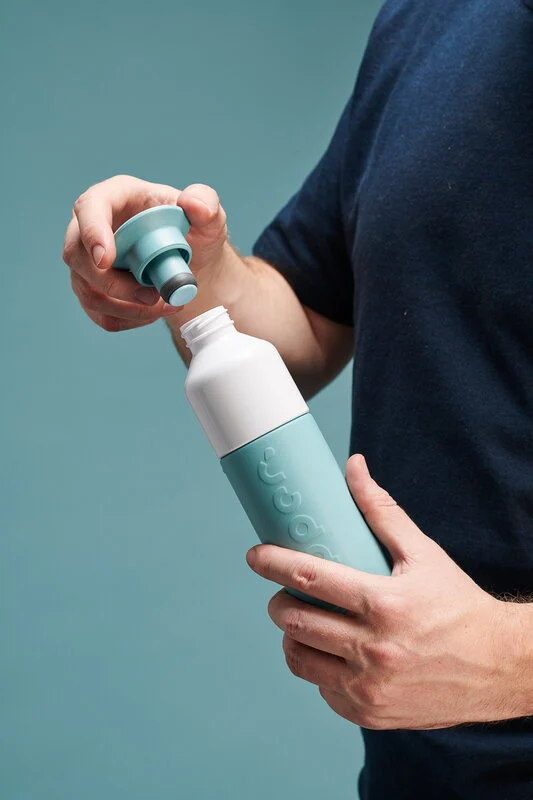
Dopper claims to have the world’s #1 sustainable bottle collection and we have to agree. Dopper is our #1 pick for a sustainable, non-toxic, functional, reusable drink bottle. They have really gone above and beyond.
Where to start? Their Dopper Original Bottle range is made from 70% plant-based waste and 15% recycled plastic waste and it has zero carbon footprint.
These bottles are made in a factory in The Netherlands that runs on 100% renewable energy and produces no wastewater. The Dopper Original is the first bottle in the world to attain Cradle to Cradle® Gold certification.
Both the award-winning Dopper Glass bottle and their stainless steel bottles are manufactured in China, but they’re still Cradle to Cradle® Bronze certified and meet BSCI standards. Both the glass and stainless steel bottles use varying amounts of recycled materials.
The company has also created the Dopper Tap, a water refill station that can be installed in homes and businesses that’s designed to encourage behavior through positive messages displayed on a screen.
The design of the Dopper bottle is unique in that the lid also doubles as a cup (or wine glass). With a mission to “end packaged water”, we think Dopper is leading the way when it comes to sustainable reusable drink bottles.
2. Worthy


What we like ✅
- BPA/PVC/Phthalate and plastic free
- 100% plant-based
- Carbon neutral manufacturing
- Fully recyclable
- 10% to charity
- Dishwasher safe
- Functional design
Worthy bottles are made from 100% sustainably grown sugarcane so they’re completely plastic free. Basically, sugar is squeezed out of the sugarcane and “polymerized” to produce a durable bioplastic. They even use the sugarcane waste to help power the factory and claim the manufacturing process is carbon neutral.
These reusable bottles are 750 ml, making them a good size for daily use, and they’re available in different colors and designs. Worthy bottles aren’t only reusable, they’re circular, meaning they can be recycled with other plastics or sent back to the company to be made into new bottles.
Worthy is committed to donating 10% of proceeds to charity, the main one being Vision Rescue which supports people living in slums in India.
We reckon Worthy plant-based bottles are an excellent alternative to plastic, glass and stainless steel. They’re clearly one of the most sustainable reusable bottles available.
3. 24 Bottles


What we like ✅
- BPA/PVC/Phthalate and plastic free
- Stainless steel
- B-Corp certified
- Carbon Neutral certified
- Various sizes and styles
- Lifetime Guarantee
24 Bottles is a sustainable drink bottle brand founded in Italy in 2013 with a mission to reduce the impact of plastic bottles. They believe good design can inspire people to adopt more sustainable habits. And it’s fair to say their range of reusable stainless steel bottles are beautifully designed.
They have a variety of options, including an insulated bottle, travel tumbler, and kids’ bottle, in a range of sizes, from 250 ml to 1000 ml.
There are several reasons why 24 Bottles are a cut above other stainless steel drink bottle brands. They are B-Corp certified, which means they meet high standards of social and environmental performance, accountability and transparency. They use high-quality, safe materials, including 18/8 food-grade, Austenitic stainless steel, food-grade silicone (for the hermetic seal), and 100% BPA-free and phthalate free plastic (for some of the smaller parts). The company is also CarbonNeutral® certified with a view to being carbon positive. They’re even transparent about the exact carbon footprint of each of their bottles.
We like that 24 Bottles has lids and accessories, such as the Sport Lid (which has a straw) and the Infuser Lid (for your herbal tea). This means you can get more use out of a single bottle, which is kind of the whole point, right?
4. Ocean Bottle


What we like ✅
- BPA/PVC/Phthalate and plastic free
- Stainless steel
- B-Corp certified
- Carbon Neutral certified
- Modular design
- Plastic bottle collection initiative
Ocean Bottle is a sustainable stainless steel drink bottle brand founded in London in 2019. They have a range of stainless steel water bottles, cups and flasks in a variety of sizes and designs.
Ocean Bottle is B-Corp certified, but the main thing that sets them apart is the work they do to clean up our oceans. With every sale of an Ocean Bottle, they fund the collection of 11.368kg of plastic that would otherwise end up in the ocean, which is equivalent to 1000 plastic bottles. So far, the company has funded the collection of well over 13,000,000kg of ocean-bound plastic waste (more than 1 billion plastic bottles). They also fund various education initiatives in the countries where they do plastic collection.
Their bottles are made from 90% recycled stainless steel and the lids are made from recycled ocean-bound plastics.
We reckon the Ocean Bottle looks great and is highly functional. Their 350 ml and 500 ml bottles have a modular design, allowing you to mix and match lids and accessories. With a mission to “Hydrate and Help the Ocean”, this is the non-toxic stainless steel bottle for those who care about ocean conservation.
4. MiiR


What we like ✅
- B-Corp certified
- CarbonNeutral® certified
- 1% For the Planet
- Evergreen® certified
- Extensive range
- Re:Claimed takeback program
Miir is a United States brand known for its premium, sustainable drinkware, particularly their range of drink bottles. Miir produces a wide range of stainless steel water bottles, tumblers, beer growlers, and even barware.
Despite their extensive collection of products, Miir is committed to doing the right thing and reducing the impact of plastic on the planet. The company is B-Corp certified and CarbonNeutral® certified. They’ve taken steps towards using recycled materials and the All Day Straw Cup is the first to be made with 90% recycled stainless steel.
We love that Miir publishes an annual Impact Report, they’re open about the suppliers they work with in China, and they have an in-depth Supplier Code of Conduct.
They also have a takeback program called Re:Claimed where you can send back your old, damaged bottles to be recycled in exchange for store credit.
On top of everything else, Miir is an incredibly generous company and has given more than $4.5 million in grants to various non profits since its inception.
While we would like to see more information about all of the materials Miir uses in their extensive product range, we’re confident that their drink bottles are highly sustainable.
Hey! You might like these, too...
Does Who Gives A Crap Bamboo Toilet Paper Live Up To The Wipe?
If you 'give a crap' about keeping things 'clean' after doing your business,…
Is The Blueland Clean Essentials Kit Truly Sustainable?
Want a clean home without 'dirty' chemicals? I tested the Blueland Clean…

The 7 Best Organic Protein Bars in 2025
Train hard and eat clean with the best organic protein bars. Made from natural,…